Plain cream cheese
Full-fat, brought to room temperature before spreading. Cold cream cheese tears the crumb instead of gliding over it.
A bagel is a structure. What you put in it, and the order you put it in, decides whether it holds together to the last bite.
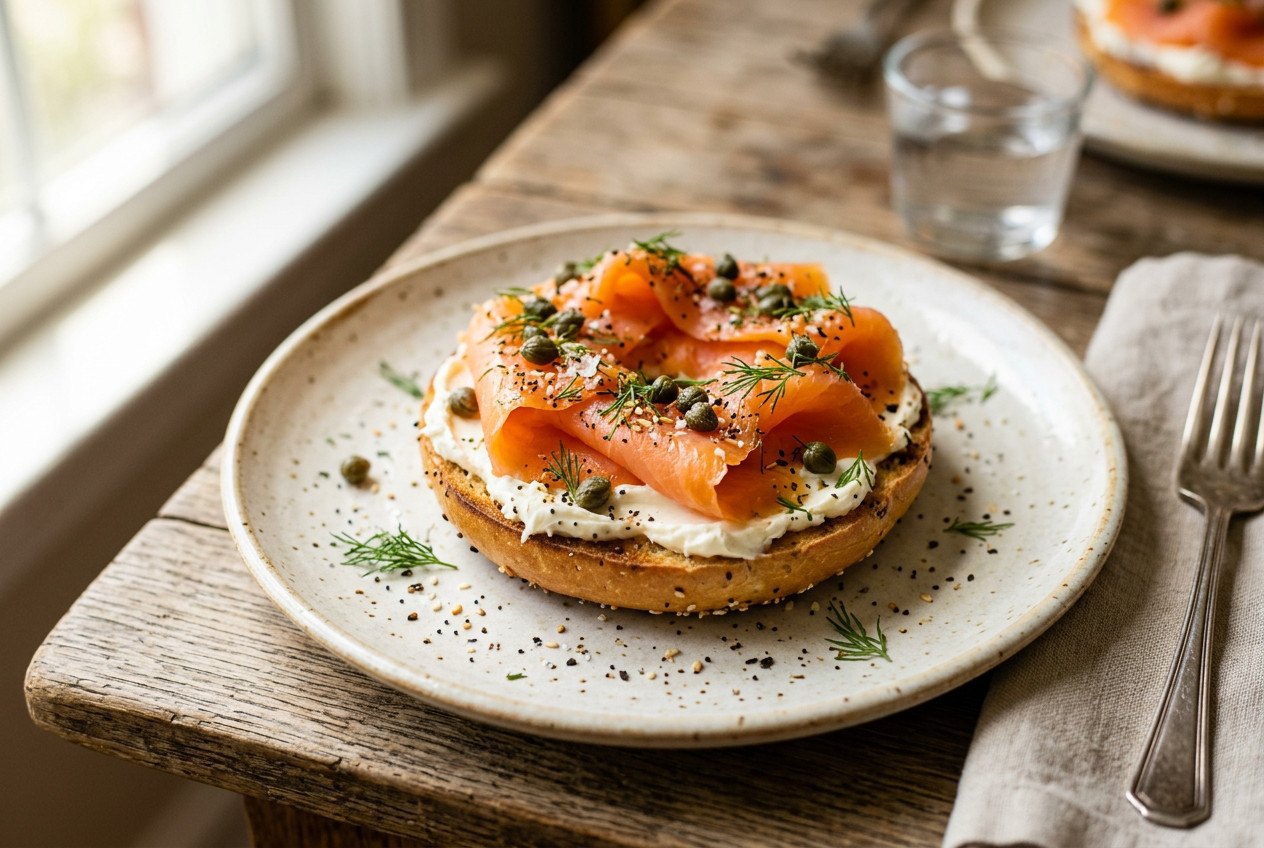
Ratios we use in the kitchen.
Full-fat, brought to room temperature before spreading. Cold cream cheese tears the crumb instead of gliding over it.
Roughly one part finely sliced scallion to eight parts cheese, rested an hour so the flavour distributes.
Softened butter beaten with a little honey and flaked salt. Best on a plain or cinnamon raisin bagel.
Salt, sugar, dill, weighted and left three days. Sliced thin against the grain.
Bottom to top, this is the sequence that survives being picked up.
The fat layer waterproofs the crumb so it does not go soggy from anything wetter placed above it.
Tomato, cured fish, egg. It sits on the sealed base, not against dry bread.
Capers, red onion, pickle. Distributed, not piled in one spot.
Dill, rocket, sprouts. On top, where they are not crushed flat.
Bagels stale fast — they are best within about six hours of the bake.
Room temperature in paper, never plastic. Plastic traps steam and softens the crust you worked for.
Freeze them, pre-sliced, the moment they are cool. A frozen bagel toasted from solid is far better than a two-day-old one.
Run it briefly under water and put it in a hot oven for five minutes. It genuinely works.